Japan Weather 2026: Seasonal Temperatures by Region, Rainy Season, Typhoons and the Best Time to Visit
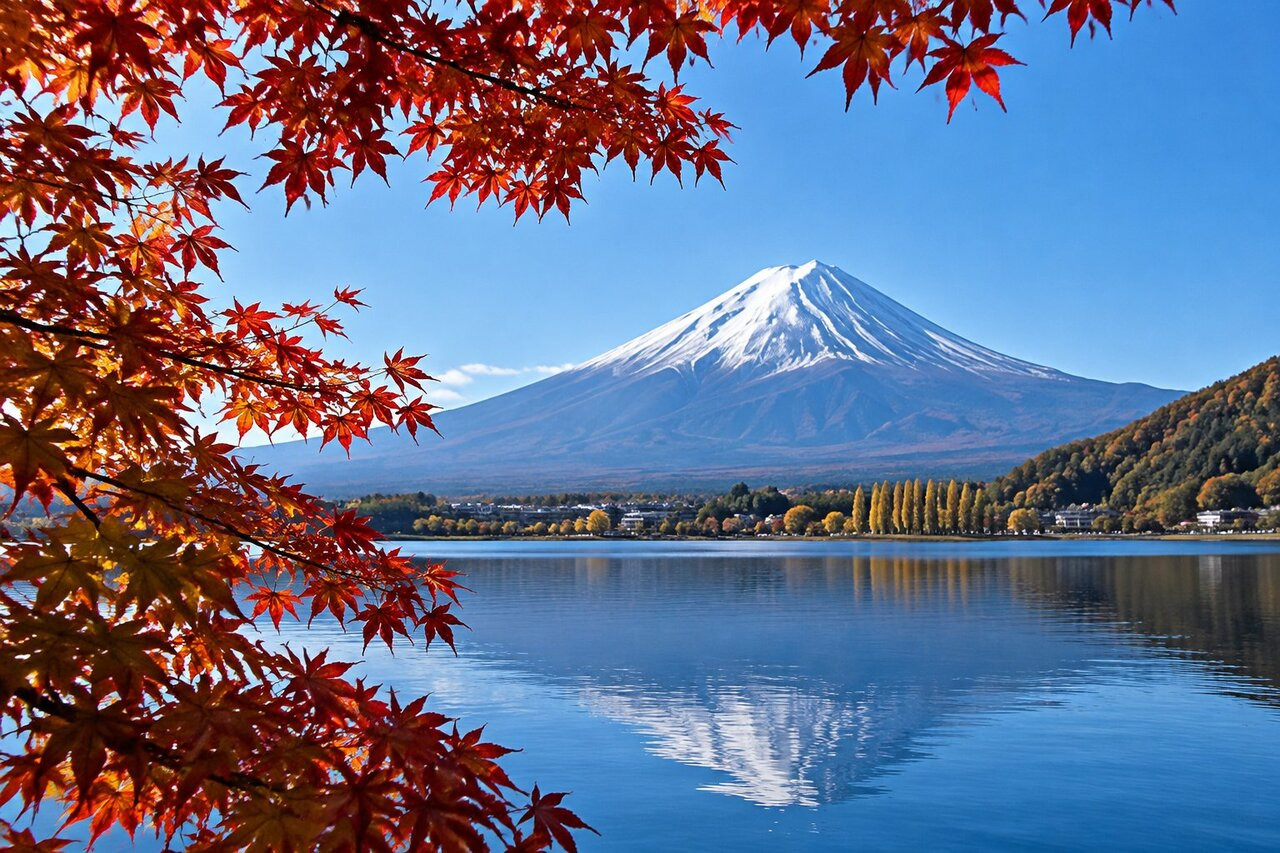
This is a guide to Japan's weather. It covers seasonal temperatures and rainfall in 7 cities (Sapporo, Sendai, Tokyo, Nagoya, Osaka, Fukuoka and Naha), the rainy season and typhoon season by region, cherry blossom and autumn leaf timing, what to wear each season, and where to go when.
- North and south are very different: January averages -3.2°C in Sapporo, 5.4°C in Tokyo and 17.3°C in Naha
- Rainy season (normal dates): Okinawa from around May 10 to June 21, Kanto to Kyushu from early June to around July 19, and Hokkaido has no rainy season
- Typhoons come closest to Japan most often in August and September; in Okinawa they pick up from July
- Normal cherry blossom opening: Tokyo March 24, Sapporo May 1; autumn leaves in Tokyo turn around late November
- Changing trains with luggage in rain, typhoons or snow is the hardest part, so see the airport transfer and private car options below
How warm or cold is Japan in each season?
Japan stretches a long way from Hokkaido to Okinawa, so north and south can differ by 20°C in the same month. The table below uses Japan Meteorological Agency (JMA) normals for 1991–2020, with January, April, July and October standing in for the four seasons.
| City (station) | Jan | Apr | Jul | Oct |
|---|---|---|---|---|
| Sapporo | -3.2°C | 7.3°C | 21.1°C | 12.1°C |
| Sendai | 2.0°C | 10.7°C | 22.9°C | 15.7°C |
| Tokyo | 5.4°C | 14.3°C | 25.7°C | 18.0°C |
| Nagoya | 4.8°C | 14.6°C | 26.9°C | 18.6°C |
| Osaka | 6.2°C | 15.2°C | 27.7°C | 19.5°C |
| Fukuoka | 6.9°C | 15.4°C | 27.4°C | 19.6°C |
| Naha | 17.3°C | 21.5°C | 29.1°C | 25.5°C |
Monthly mean temperature, 1991–2020 normals. Each station has the same name as its city.
A daily mean hides a big gap between morning and midday. The next table shows January mornings, the coldest, and August afternoons, the hottest, which are more useful when you plan your days.
| City (station) | January average low | August average high |
|---|---|---|
| Sapporo | -6.4°C | 26.4°C |
| Sendai | -1.3°C | 28.2°C |
| Tokyo | 1.2°C | 31.3°C |
| Nagoya | 1.1°C | 33.2°C |
| Osaka | 3.0°C | 33.7°C |
| Fukuoka | 3.9°C | 32.5°C |
| Naha | 14.9°C | 31.8°C |
The hottest summer cities are Osaka and Nagoya, with August highs averaging over 33°C, hotter than Naha. In winter, Tokyo and Osaka mornings sit near 0°C but snow rarely settles, while Sapporo stays below 0°C all day in January, with an average high of just -0.4°C.
Which months are the rainiest in Japan?
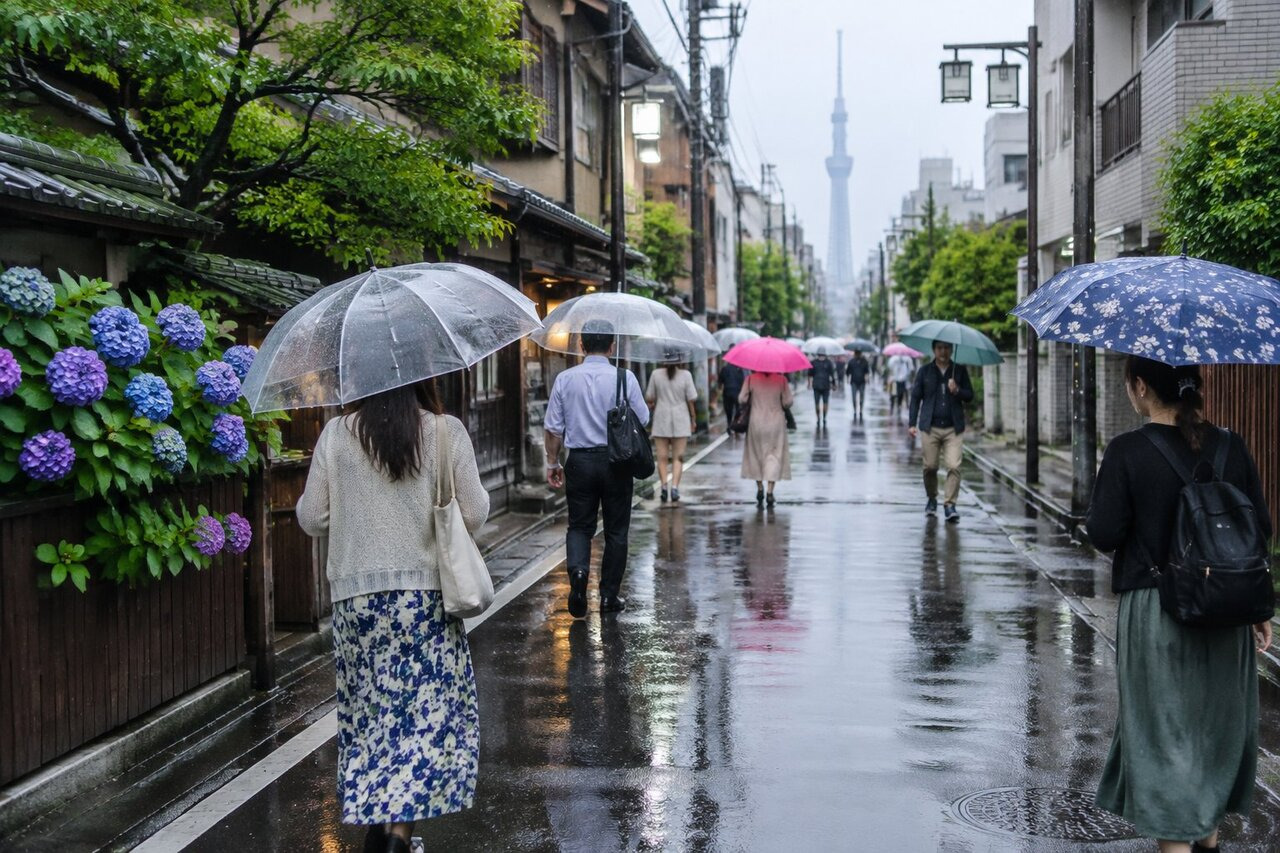
Japan has two wet periods: the rainy season in June and July, and typhoons plus autumn rain in September and October. Each city peaks at a different time. Here is normal rainfall for those four months.
| City (station) | Jun | Jul | Sep | Oct |
|---|---|---|---|---|
| Sapporo | 60.4 mm | 90.7 mm | 142.2 mm | 109.9 mm |
| Sendai | 143.7 mm | 178.4 mm | 192.6 mm | 150.6 mm |
| Tokyo | 167.8 mm | 156.2 mm | 224.9 mm | 234.8 mm |
| Nagoya | 186.5 mm | 211.4 mm | 231.6 mm | 164.7 mm |
| Osaka | 185.1 mm | 174.4 mm | 152.8 mm | 136.0 mm |
| Fukuoka | 249.6 mm | 299.1 mm | 175.1 mm | 94.5 mm |
| Naha | 284.4 mm | 188.1 mm | 275.2 mm | 179.2 mm |
Monthly precipitation, 1991–2020 normals.
Tokyo's wettest months are October and September, not the rainy season, while Fukuoka peaks in July at almost 300 mm. Winter in Tokyo is dry, with only 57.9 mm of rain and 174.4 hours of sunshine in December, so clear days are common and outdoor plans work well. Sapporo gets just 60.4 mm in June, making it the most comfortable escape while Honshu is in its rainy season.
When is the rainy season in Japan?
The rainy season (tsuyu) moves from south to north: Okinawa starts as early as May, and Tohoku is the last to finish at the end of July. JMA dates mark the middle of a transition of about five days, so they are given as "around". Below are the normals and the confirmed 2026 dates.
| Region | Normal rainy season | 2026 rainy season |
|---|---|---|
| Okinawa | around 5/10 – around 6/21 |
around 5/4 – around 6/29 |
| Northern Kyushu | around 6/4 – around 7/19 |
around 6/2 – around 7/7 |
| Kinki | around 6/6 – around 7/19 |
around 6/2 – around 7/9 |
| Tokai | around 6/6 – around 7/19 |
around 6/2 – around 7/9 |
| Kanto-Koshin | around 6/7 – around 7/19 |
around 6/2 – around 7/19 |
| Southern Tohoku | around 6/12 – around 7/24 |
around 6/20 – around 8/4 |
Normals are the 1991–2020 average. Fukuoka is in Northern Kyushu, Osaka in Kinki, Nagoya in Tokai, Tokyo in Kanto-Koshin and Sendai in Southern Tohoku.
Hokkaido is not one of JMA's rainy season regions, so it is the best place to escape the rain in June and July. The dates shift every year; in 2026, Kanto-Koshin started 5 days earlier than normal. If you visit Honshu in June, keep one or two indoor spots in your plan and switch to them when it rains.
When is typhoon season, and where is it most common?
Typhoons come close to Japan most often in August and September, 3.3 each in a normal year. On average 11.7 approach Japan a year and 3.0 make landfall. Okinawa sits closest to the typhoon track, so numbers rise from July, while Hokkaido averages fewer than 2 a year.
| Region | Jul | Aug | Sep | Oct | Year |
|---|---|---|---|---|---|
| Okinawa | 1.5 | 2.2 | 1.9 | 1.1 | 7.7 |
| Northern Kyushu | 0.8 | 1.1 | 1.1 | 0.4 | 3.8 |
| Kinki | 0.6 | 0.7 | 1.1 | 0.7 | 3.4 |
| Tokai | 0.6 | 0.8 | 1.2 | 0.7 | 3.5 |
| Kanto-Koshin | 0.4 | 0.8 | 1.2 | 0.7 | 3.3 |
| Hokkaido | 0.2 | 0.7 | 0.7 | 0.2 | 1.9 |
Number of typhoons approaching each region, 1991–2020 normals. "Approaching" means the typhoon's centre comes within 300 km of any weather station in that region.
For Tokyo, Osaka and Nagoya, September is the peak typhoon month, and October still sees some. If you travel between July and October, check the typhoon track a few days before you leave. On the day one comes close, swap in city and indoor spots, and think ahead about getting to and from the airport around your flight.
When are cherry blossoms and autumn leaves?
Cherry blossoms open from south to north, and autumn leaves turn from north to south. Here are JMA's normal cherry blossom opening dates. Tokyo and Nagoya share the same date, with Osaka and Kyoto two or three days later.
| City (station) | Normal opening date |
|---|---|
| Naha | January 16 (Taiwan cherry) |
| Fukuoka | March 22 |
| Tokyo | March 24 |
| Nagoya | March 24 |
| Osaka | March 27 |
| Sendai | April 8 |
| Sapporo | May 1 |
1991–2020 normals. Naha observes the Taiwan cherry (hikanzakura); the other cities observe Somei-Yoshino.
For autumn colour, JMA records the date maple leaves turn red (kaede koyo). Normal dates fall around late October in Sapporo, late November in Sendai, the end of November in Tokyo and Nagoya, early December in Osaka and Fukuoka, and the first third of December in Kyoto. In 2025 it was November 23 in Tokyo and December 10 in Kyoto, so expect about a week either way. The 2027 sakura forecast and recent bloom dates are in Japan Cherry Blossom Forecast 2027.
What should you wear in Japan each season?
The most common packing mistakes are the morning-evening swing in spring and autumn, and the indoor-outdoor gap in winter. The guide below uses Tokyo and Osaka normals, with Hokkaido and Okinawa covered separately.
Spring (March to May)
In April Tokyo averages a high of 19.4°C and a low of 9.8°C, so wear long sleeves in the day and add a light jacket or knit for mornings and evenings. March is still cool for cherry blossoms, so take an extra layer for evening viewing. Sapporo averages only 7.3°C in April, so you still need a proper winter coat.
Summer (June to August)
August highs average 31.3°C in Tokyo and 33.7°C in Osaka, so short sleeves, a hat, sunscreen and water are the basics. Air conditioning indoors is strong, so pack a thin long-sleeved top. In the rainy season, add a folding umbrella and shoes that cope with wet; in Hokkaido, Sapporo averages 22.3°C in August, so bring a jacket for mornings and evenings.
Autumn (September to November)
September is still warm, averaging 23.3°C in Tokyo. October drops to a comfortable 18.0°C, where long sleeves and a light jacket are enough. By November Tokyo averages 12.5°C, so bring a warmer coat for the late-November leaves. Sapporo averages 5.2°C in November and already gets snow.
Winter (December to February)
In January, Tokyo and Osaka reach about 10°C in the day and near 0°C in the morning, so wear a coat or light down jacket with a scarf and gloves. Heating indoors is strong, so thinner layers underneath are easier to take off. Hokkaido needs more: Sapporo averages -3.2°C in January, so bring non-slip snow boots, a hat and gloves. Okinawa is the opposite, averaging 17.3°C in Naha in January, so a light jacket is enough.
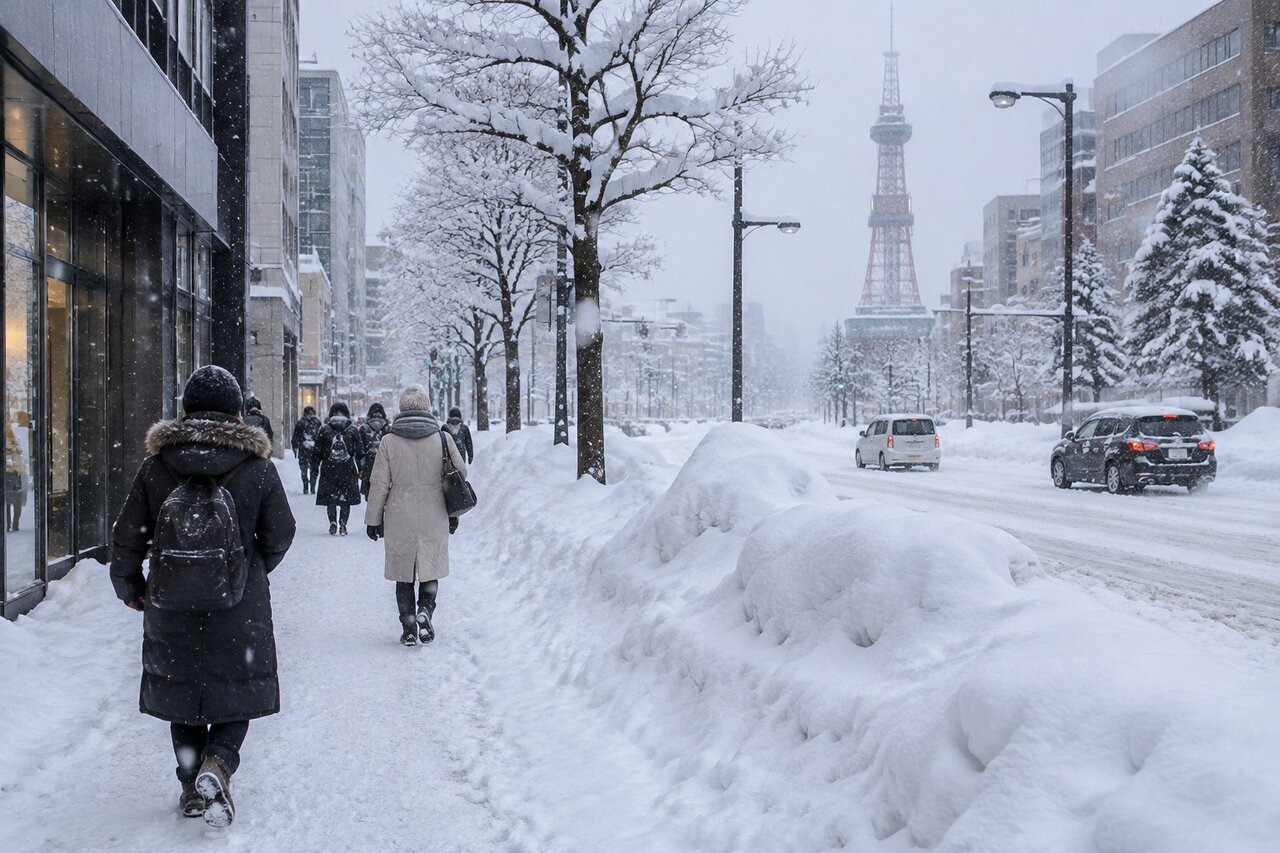
Sapporo gets a lot of snow: normal January snowfall is 137 cm, and the deepest snow in February averages 95 cm. Pavements ice over and pulling a suitcase through snow is hard work, so make sure your soles have a non-slip tread.
When is the best time to visit each part of Japan?
Put temperature, rain and blossom timing together and every month has somewhere good to go. Here it is by month.
| Month | Where to go | Why |
|---|---|---|
| Jan–Feb | Hokkaido, Okinawa | Sapporo averages -3.2°C in January for snow; Naha averages 17.3°C, with Taiwan cherry blossoms |
| Late Mar–early Apr | Tokyo, Osaka, Kyoto | Normal cherry blossom opening: Tokyo 3/24, Osaka 3/27 |
| May | Hokkaido, across Honshu | Sapporo's normal bloom is 5/1; Honshu is before the rainy season, Tokyo averages 18.8°C |
| Jun–Aug | Hokkaido | No rainy season; Sapporo averages 22.3°C in August, 4.6°C cooler than Tokyo |
| Oct–Nov | Tokyo, Osaka, Kyoto, Nagoya | Tokyo averages a comfortable 18.0°C in October; leaves turn from late November to early December |
| Dec | Tokyo, Osaka | Tokyo gets only 57.9 mm of rain in December, with plenty of clear days |
If you can only pick one time for a first trip, early April and October to early November have the most comfortable temperatures and relatively little rain. If you would rather skip the crowds and don't mind the cold, Tokyo and Osaka are mostly sunny from December to February; it is cold, but rainy days are rare.
How do you get around easily in rain, typhoons or winter?
Holding an umbrella while pulling a suitcase, flights retimed by a typhoon, walking to the station through snow: the hardest part is always changing trains with your luggage. Lanytrip runs airport transfers in Tokyo and Osaka and a 10-hour Mt Fuji private car from Tokyo, so you can match them to the season.
- Narita / Haneda Airport ⇄ central Tokyo: for arrivals in the rainy or typhoon season, or winter trips with big bags, children or older travellers
- Kansai Airport ⇄ central Osaka: for June to September trips to Osaka when you don't want to change trains in heavy rain or heat
- 10-hour private car from Tokyo: Mt Fuji and Lake Kawaguchi: for December to February trips to see Mt Fuji without waiting for buses in the cold
- Narita / Haneda Airport ⇄ central Tokyo: Meet in the arrivals hall, load your bags and ride straight to the hotel door, with no umbrella and no platform to find on a rainy day.
- Kansai Airport ⇄ central Osaka: From Kansai Airport to central Osaka without dragging luggage between trains, which saves the most energy in summer heat and the rainy season.
- 10-hour private car from Tokyo: Mt Fuji and Lake Kawaguchi: Board at your central Tokyo hotel for a day trip to Lake Kawaguchi. On cold or rainy days you wait in the car, not at an outdoor bus stop.
Recommended transfer options
Narita / Haneda Airport ⇄ central Tokyo
Get a 1-on-1 quote ›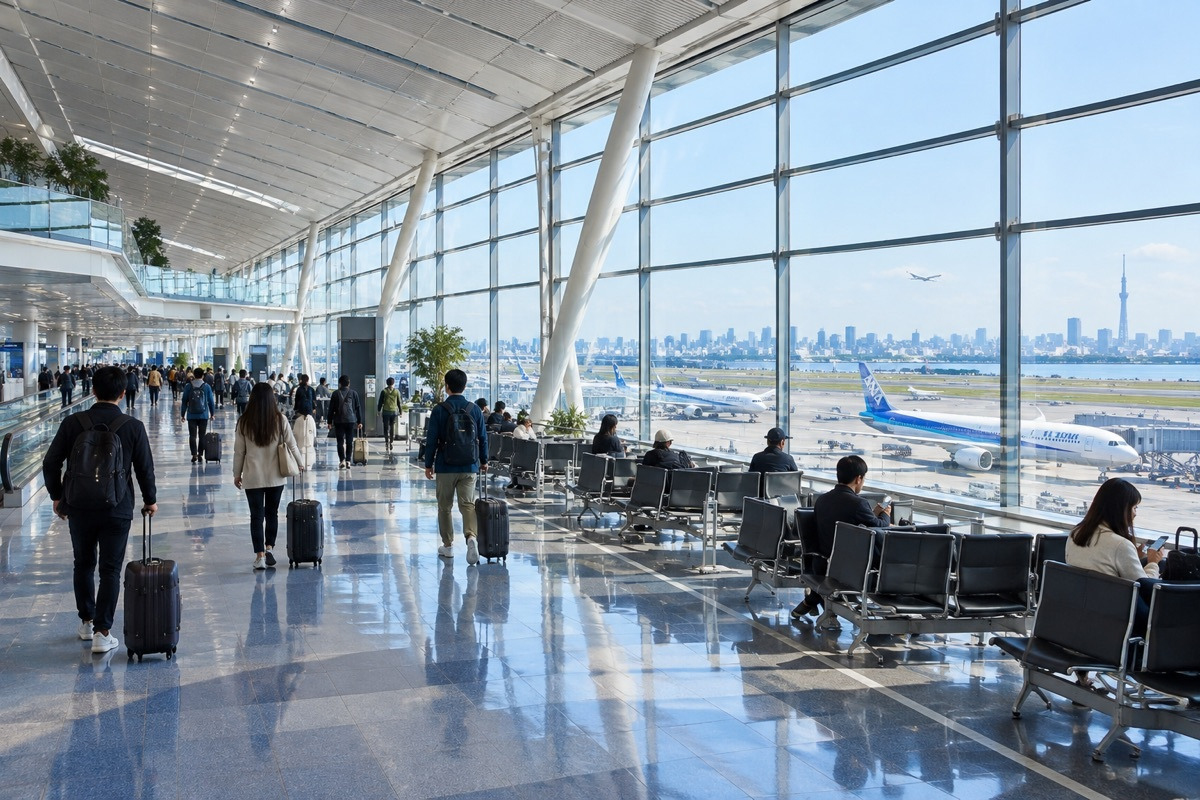
Kansai Airport ⇄ central Osaka
Get a 1-on-1 quote ›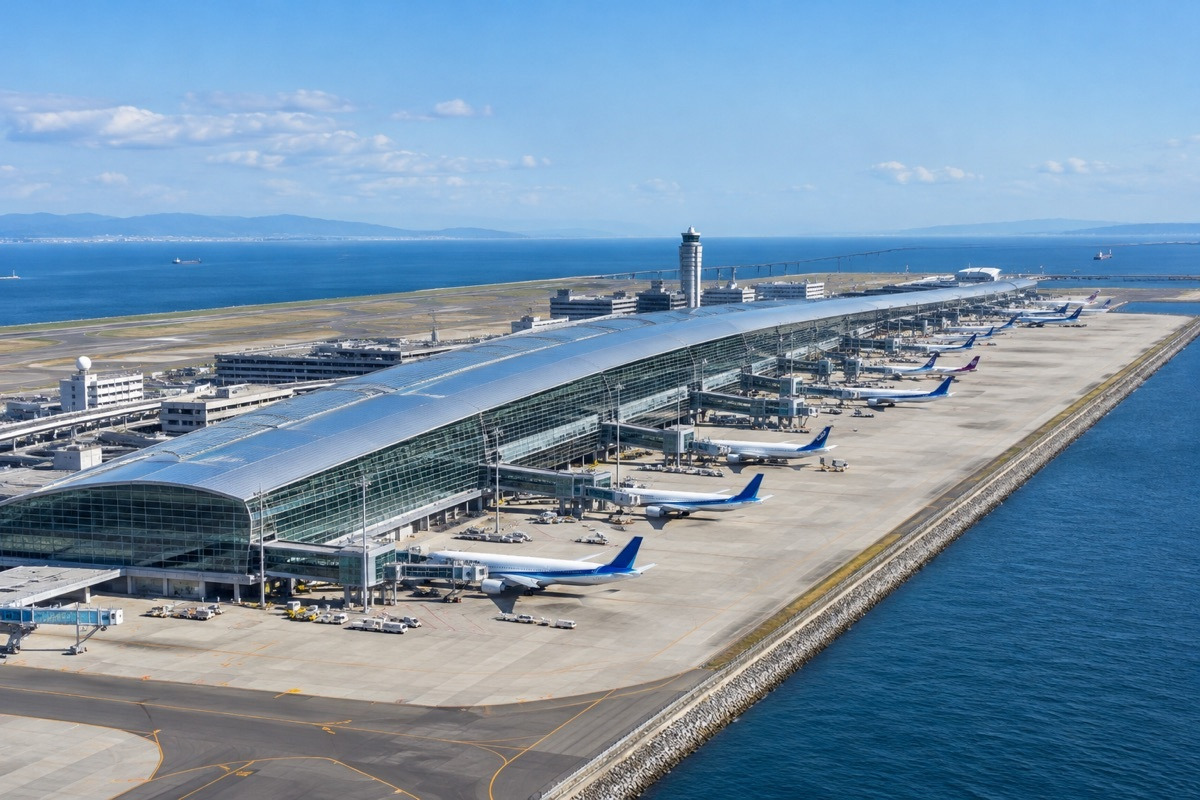
10-hour private car from Tokyo: Mt Fuji and Lake Kawaguchi
Get a 1-on-1 quote ›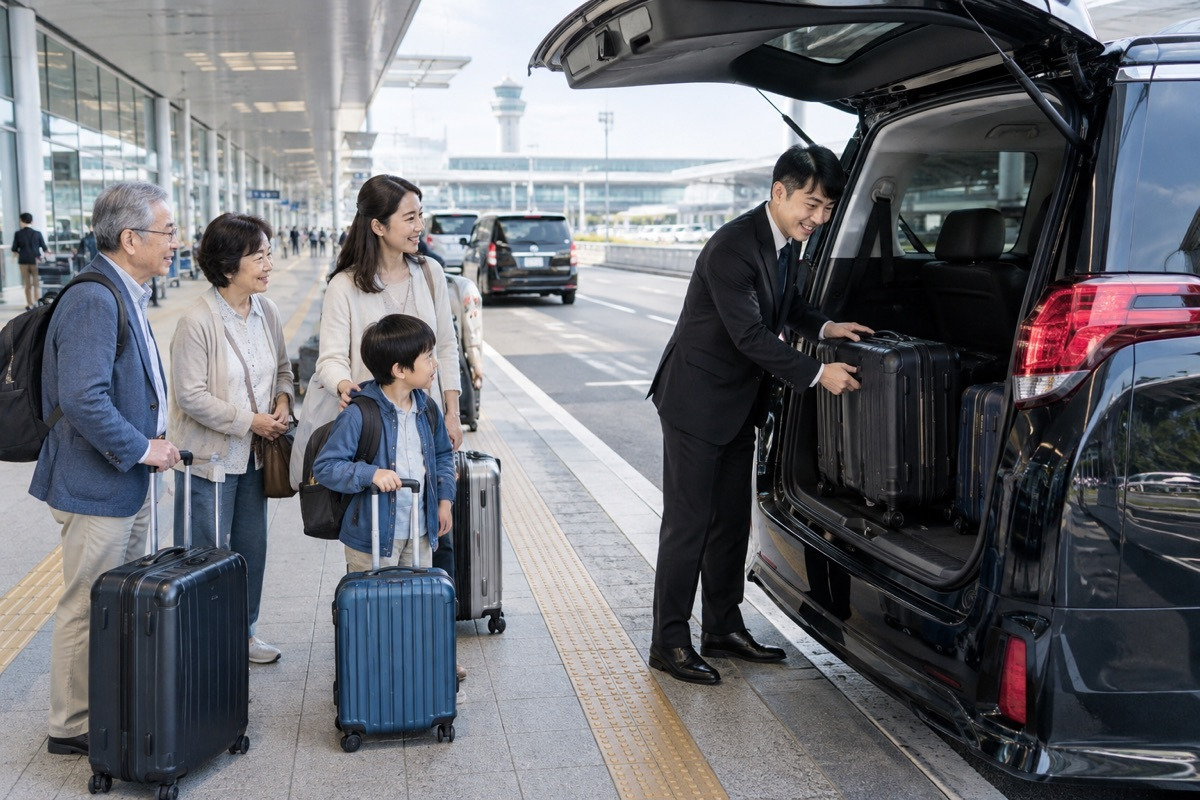
Have this ready when you ask about a transfer on LINE
- Your hotel (name or address)
- Date of use
- Number of people and luggage (strollers, large bags)
- Your planned itinerary
For a faster, more accurate quote, please send all of the above in one message on LINE.
Summary: what to watch for and how to plan
Things to watch for
North and south differ a lot: in January Sapporo averages -3.2°C and Naha 17.3°C, so pack separately if you cross regions. Honshu's rainy season runs from early June to mid or late July, and typhoons come closest in August and September, so check forecasts and typhoon tracks a few days before you leave in that window.
How to plan it
Plan cherry blossoms for late March to early April in Tokyo and Osaka, and autumn leaves around the end of November. Head to Hokkaido in June to August to escape rain and heat, and to Hokkaido for snow or Okinawa for warmth in January and February. In the rainy and typhoon seasons, keep a few indoor spots ready to swap in.
Why we suggest airport transfers and private cars
On bad-weather days, changing trains with luggage and an umbrella, or walking to the station through snow, wears you out most. An airport transfer goes straight from arrivals to your hotel, and the Mt Fuji private car leaves from your hotel door, so you wait in the car on cold or wet days. See the 3 options above, or message us on LINE.
Japan weather FAQ
When is the rainy season in Japan?+
From Kanto to Kyushu it normally runs from early June to around July 19. Okinawa runs from around May 10 to June 21, Southern Tohoku until around July 24, and Hokkaido has no rainy season.
Which month has the most typhoons in Japan?+
Typhoons come close to Japan most often in August and September, 3.3 each in a normal year. Tokyo and Osaka peak in September, and Okinawa picks up from July.
Is Tokyo very cold in December?+
Tokyo averages 7.7°C in December, about 12°C in the day and 4°C in the morning. A coat or light down jacket with a scarf is enough, and rain is low with lots of clear days.
What should I wear in Hokkaido in winter?+
Sapporo's January average high is only -0.4°C, so bring non-slip snow boots, a warm coat, a hat and gloves, with thinner layers underneath for heated indoor spaces.
What is the best season for a first trip to Japan?+
Early April and October to early November are the most comfortable. Tokyo averages 14.3°C in April and 18.0°C in October, with cherry blossoms in spring and autumn leaves to follow in autumn.
